AI-generated editorial illustration; not a contest entrant or winner.
Baby Development Milestones: Your Complete First-Year Guide
The first year is one long highlight reel — first smile, first roll, first word. Here is a calm, month-by-month map of what tends to happen when, and how to support it.
The first year moves fast. One month you are holding a sleepy newborn who mostly eats and dozes; twelve months later you are chasing a giggling near-toddler who has opinions about everything. In between are dozens of small firsts, and it is completely normal to wonder whether your baby is "on track."
This guide is the map. It walks through the whole first year at a glance, then points you to a detailed guide for each stage. Think of milestones as a typical range, not a deadline — healthy babies reach them on their own timelines, and a few weeks in either direction is usually nothing to worry about.
How to read milestones: They describe what most babies do by a certain age, not a schedule your baby must hit. What matters more than any single skill is steady, forward progress over time. If your baby was born early, it often helps to think in terms of their adjusted age.
The First Year at a Glance
Development tends to move head-to-toe and center-outward: babies control their head before their hands, and their hands before their feet. Here is the broad arc, which we break down stage by stage below.
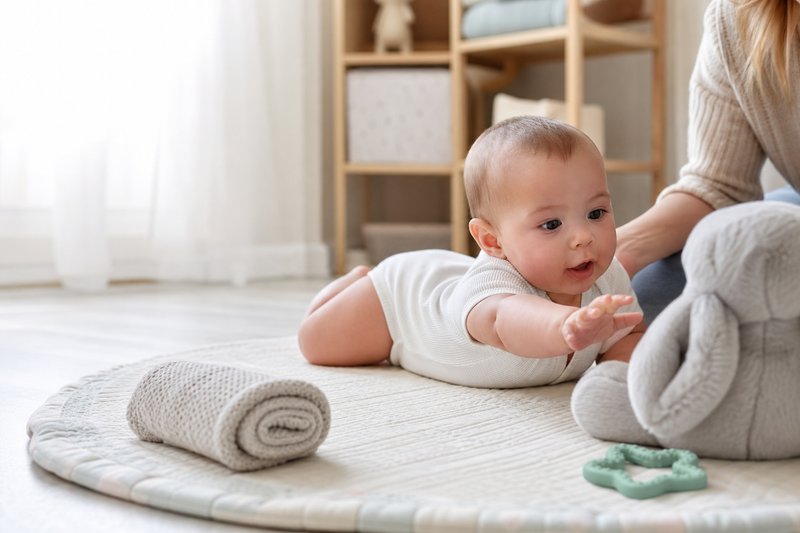
- Months 0–1: Reflexes, feeding, sleeping, and the very first head lifts during tummy time.
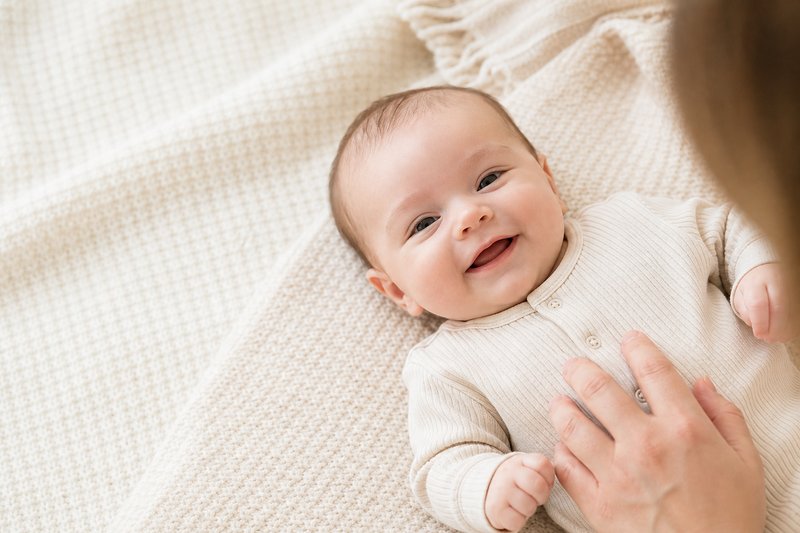
- Months 2–3: The first real social smile, cooing, and steadier head control.
- Months 4–6: Rolling, reaching and grabbing, big laughs, and often the start of solid foods.
- Months 7–9: Sitting without support, crawling, the pincer grasp, and stranger awareness.
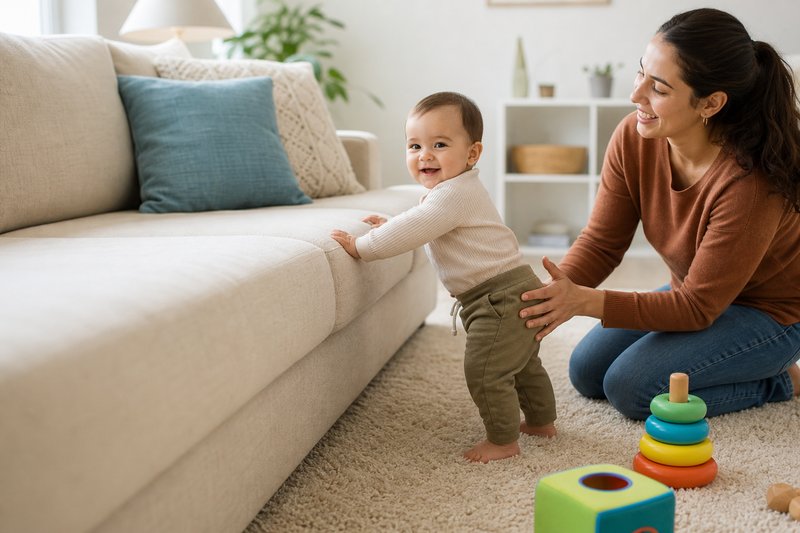
- Months 10–12: Pulling up, cruising the furniture, waving, and sometimes a first word or step.
The Four Areas Milestones Fall Into
Pediatricians usually group milestones into four buckets. Watching all four — rather than fixating on one — gives you the truest picture.
- Motor — big movements (rolling, sitting, crawling) and small ones (grasping, transferring toys, the pincer grip).
- Language and communication — cooing, babbling, responding to their name, and first words.
- Cognitive — curiosity, cause and effect ("I drop it, you pick it up"), and object permanence.
- Social and emotional — smiling, laughing, attachment to caregivers, and, later, wariness of strangers.
Month-by-Month Guides
Each stage has its own detailed guide with what is typical, simple ways to support your baby, and what to bring up at checkups:
- Your baby's first month (0–1) — surviving and bonding in the newborn haze.
- Baby milestones: months 2–3 — the social smile arrives.
- Baby milestones: months 4–6 — rolling, grabbing, and first tastes.
- Baby milestones: months 7–9 — sitting, crawling, and on the move.
- Baby milestones: months 10–12 — pulling up and cruising toward one.
- Your baby turns one (12 months) — where the first year lands.
How to Support Development (at Any Age)
You do not need flashcards or fancy toys. The everyday things you already do are what build a baby's brain.
- Talk, narrate, and read. Describe what you are doing, name objects, and read together daily. Language grows from hearing language.
- Get on the floor. Supervised tummy time and floor play build the strength behind rolling, sitting, and crawling.
- Follow their lead. "Serve and return" — responding to your baby's coos, gestures, and expressions — is one of the most powerful things you can do.
- Keep it low-tech. Real faces and real objects beat screens in the first two years.
Milestones and Growth Are Different Things
It is easy to lump "is my baby developing normally?" together with "is my baby the right size?" — but they are tracked separately. Milestones are about skills; growth is about height, weight, and head circumference plotted on a chart. If the percentile conversation at checkups confuses you, our plain-language guide to baby growth percentiles unpacks it.
When to Check With Your Pediatrician
Regular well-baby visits exist partly to track development, so your doctor is already watching. Between visits, it is worth a call if you notice:
- Your baby loses a skill they previously had.
- Little to no eye contact, smiling, or social engagement by the ages those typically appear.
- Significant delays across several areas at once, rather than a single skill lagging.
- Stiffness, floppiness, or movement that consistently favors one side.
Trust your instincts. You know your baby better than anyone, and raising a question early is always reasonable. The CDC's free "Learn the Signs. Act Early." program (cdc.gov/ActEarly) offers milestone checklists and a tracker app if you like having a reference.
Frequently Asked Questions
What are the main baby development milestones in the first year? The headline firsts are the social smile (around 2 months), rolling (around 4 months), sitting unsupported (around 6 months), crawling (around 9 months), and pulling to stand with first words or steps near 12 months. Ranges vary widely.
Should I worry if my baby is "behind"? Usually not. Milestones are ranges, and a baby ahead in one area is often taking their time in another. Persistent delays across multiple areas, or losing a skill, are the signals worth a pediatrician's input.
Do premature babies hit milestones later? Often they track to their adjusted age (age from the due date, not the birth date) for the first couple of years. Your pediatrician will factor this in.
Celebrate Every Stage
Milestones are worth documenting — the wobbly first sit, the gummy laugh, the triumphant pull-up. When you catch one of those moments, you can enter your photo in our monthly Baby of the Month contest and see it on the leaderboard. However your baby is growing, each stage only comes around once.
Disclaimer: This article shares general parenting information, not medical advice. Every child develops at their own pace. For questions about your child's growth or development, consult your pediatrician and the CDC's "Learn the Signs. Act Early." milestone resources.
Your Baby Could Be Our Next Winner!
Cash Prize in monthly prizes • FREE entry • Real winners • Optional paid votes