AI-generated editorial illustration; not a contest entrant or winner.
Baby Milestones: Months 10-12 (Pulling Up & Cruising)
The home stretch of the first year: pulling up, cruising along the couch, waving bye-bye, and — for some babies — a wobbly first step or a meaningful first word.
The last stretch of the first year is a burst of confidence. Your baby has spent months building strength and now they want to be up — hauling themselves to standing, side-stepping along the furniture, and eyeing that gap between the coffee table and the couch like an Olympic long-jumper.
Here is what tends to happen between roughly 10 and 12 months. It closes out the journey mapped in our first-year milestones guide.
What's Typical at 10-12 Months
Movement
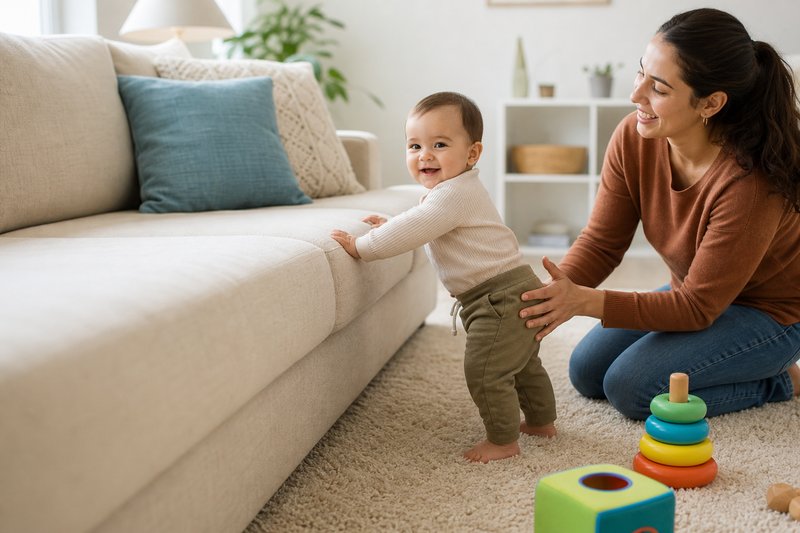
- Pulling to stand against furniture, then cruising — walking sideways while holding on.
- Standing alone for a few seconds, and sometimes taking those first independent steps (though plenty of babies walk a bit later — anywhere up to around 18 months can be typical).
- A refined pincer grasp — picking up tiny bits of food and feeding themselves.
- Putting objects into a container and taking them back out, over and over.
Communication
- A first word or two with real meaning — often "mama," "dada," or a favorite object — usually around 12 months.
- Waving bye-bye, clapping, and pointing at things they want.
- Understanding simple requests like "come here" and responding to "no."
Cognitive and Social
- Looking for hidden objects — object permanence is well established now.
- Copying you: babbling into a toy phone, "brushing" their hair, waving.
- Showing clear preferences for people, toys, and foods, and handing you objects to share the moment.
Simple Ways to Support This Stage
- Give safe things to cruise along. A sturdy, stable surface at the right height invites practice; push-toys can help once they are steady.
- Name and point together. When your baby points, name what they are pointing at — this is language taking off.
- Play back-and-forth games. Rolling a ball, handing toys back and forth, and peekaboo all build social and motor skills.
- Let them self-feed. Soft, safe finger foods build the pincer grasp and independence (and mess — that is the deal).
Walking is not a race. Whether your baby walks at 10 months or 15, it says nothing about how bright or capable they are. Crawlers and late walkers catch up just fine. For the full picture, see our guide to baby walking milestones.
When to Check With Your Pediatrician
Bring it up if, by around 12 months, your baby is not pulling to stand, is not crawling or scooting, does not search for hidden objects, says no words at all, or does not use gestures like pointing and waving. Ranges are wide, and it is always fine to ask.
What Comes Next
The first birthday is a milestone of its own. See where it all lands in your baby turns one: the 12-month guide, and look ahead to first words in our toddler language guide.
Those first wobbly steps and proud stand-ups are the photos you will want forever — enter one in our monthly contest.
Disclaimer: This article shares general parenting information, not medical advice. Every child develops at their own pace. For questions about your child's growth or development, consult your pediatrician and the CDC's "Learn the Signs. Act Early." milestone resources.
Your Baby Could Be Our Next Winner!
Cash Prize in monthly prizes • FREE entry • Real winners • Optional paid votes