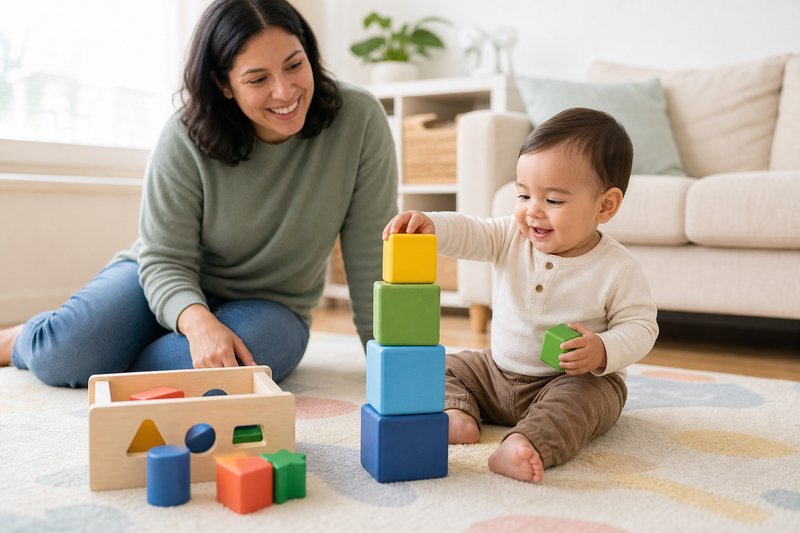
AI-generated editorial illustration; not a contest entrant or winner.
When Will My Baby Walk? Complete Guide to Walking Milestones
Learn when babies typically start walking, how to encourage first steps, and when to be concerned about delayed walking.
The Journey to Walking
Those first independent steps are one of the most anticipated milestones! Every parent wonders when their baby will start walking and whether their timeline is "normal."
Typical Walking Timeline
According to the CDC's 1-year milestone checklist, many children take their first steps around 12 months — but a wide range is normal. Some walk earlier; others take several more months.
- Before 12 months: Pulling to stand, cruising along furniture
- Around 12 months: First independent steps for many children
- 12–18 months: Walking becomes steadier for most
- After 18 months: Talk to your pediatrician if your child isn't walking independently
The range of normal is wide. Early or late walking on its own rarely predicts long-term outcomes — your pediatrician can assess your child's overall development.
Pre-Walking Milestones
Before walking, babies typically:

- 6-9 months: Sit without support
- 7-10 months: Crawl or scoot
- 8-10 months: Pull to stand
- 9-12 months: Cruise along furniture
- 10-14 months: Stand alone briefly
- 11-15 months: First independent steps!
Signs Your Baby is Ready to Walk
- Pulling up on everything
- Cruising confidently along furniture
- Standing without support for several seconds
- Squatting down and standing back up
- Walking while holding just one of your hands
How to Encourage Walking
Create a Safe Environment
- Clear pathways of obstacles
- Use baby gates for stairs
- Secure furniture to walls
- Remove sharp-edged coffee tables
- Provide stable furniture for cruising
Activities to Build Skills
- Assisted walking: Hold both hands, then progress to one
- Push toys: Sturdy wagons or walkers (not seated walkers)
- Motivation: Place favorite toys just out of reach
- Dance parties: Hold baby's hands and bounce to music
- Barefoot time: Better grip and balance than shoes
Common Concerns
"My baby isn't crawling but wants to walk"
Some babies skip crawling entirely! It's not a required milestone.
"My baby was walking but stopped"
Regression can happen after a fall, illness, or when focusing on other skills like talking. Usually temporary!
"Should I use a baby walker?"
The AAP advises against seated baby walkers due to injury risk. Push toys with supervision are a common alternative — confirm what's appropriate for your child's age with your pediatrician.

When to Talk to Your Pediatrician
Consult your doctor if your child:
- Isn't walking by 18 months
- Can't stand with support by 12 months
- Walks only on tiptoes after several months of walking
- Has significant asymmetry in movement
- Loses previously gained skills
After First Steps
The walking journey continues:
- 12-15 months: Wide-legged "zombie walk"
- 15-18 months: More coordinated gait
- 18-24 months: Running begins
- 2 years: Jumping with both feet
Remember: Early walkers aren't more athletic or intelligent than late walkers. Each child follows their own unique timeline. Celebrate their individual journey!
Disclaimer: This article shares general parenting information, not medical advice. Every child develops at their own pace. For questions about your child's growth or development, consult your pediatrician and the CDC Learn the Signs. Act Early. milestones resources.
Your Baby Could Be Our Next Winner!
Cash Prize in monthly prizes • FREE entry • Real winners • Optional paid votes