AI-generated editorial illustration; not a contest entrant or winner.
Baby Milestones: Months 4-6 (Rolling, Grabbing & First Foods)
Months four to six are when babies get hands-on — literally. Rolling, grabbing, mouthing everything, laughing out loud, and often the first spoonful of solids.
If months two and three were about smiling and cooing, months four to six are about doing. Your baby's hands become tools, their core gets stronger, and the world turns into something to grab, gum, and investigate. It is also the stage most families dip a toe into solid foods.
Here is what tends to happen between roughly 4 and 6 months. For the full timeline, see our first-year milestones guide.
What's Typical at 4-6 Months
Movement
- Rolling — often front-to-back first, around 4 months, then back-to-front. Once rolling starts, never leave your baby unattended on a raised surface.
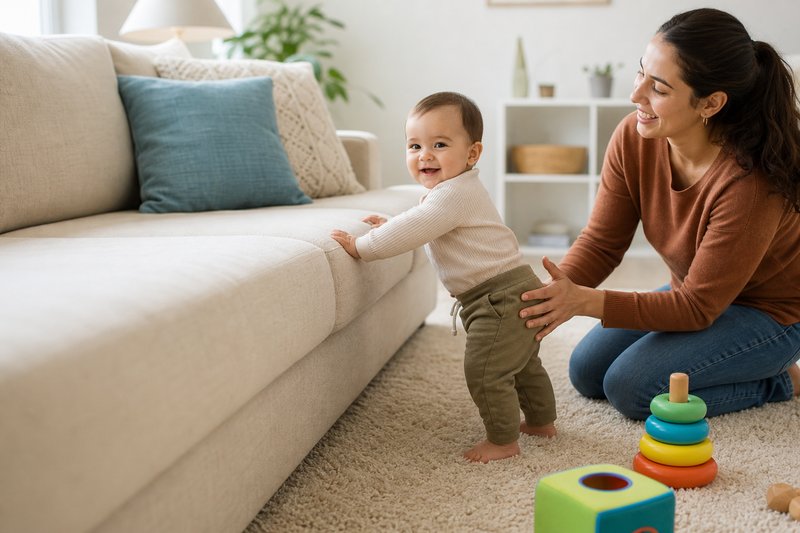
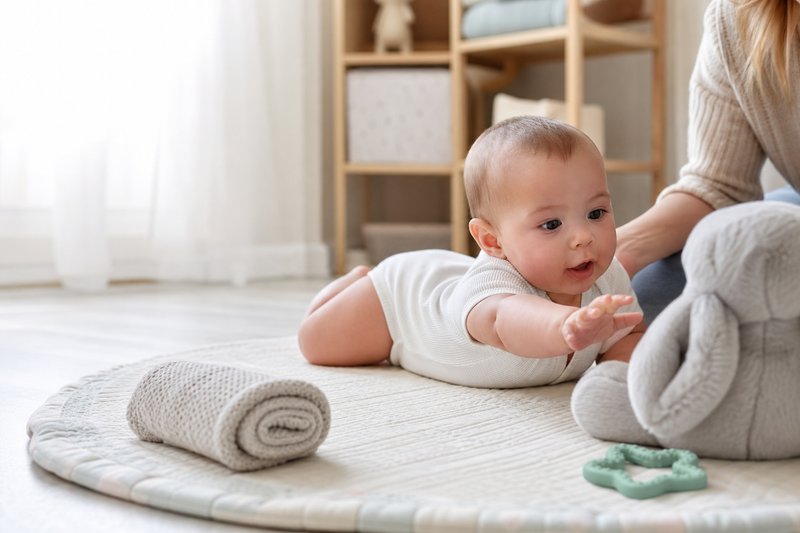
- Pushing up on hands during tummy time, and sitting with support (then, toward 6 months, briefly on their own).
- Reaching for and grabbing toys, then bringing them straight to their mouth — mouthing is how babies explore.
Communication
- Belly laughs and squeals — the good stuff.
- Babbling begins: strings of consonant sounds like "ba," "ga," and "da."
- Responding to their name and to changes in your tone of voice.
Looking and Learning
- Tracking objects smoothly and reaching for what they want — early cause and effect.
- Full-color vision and curiosity about faces, mirrors, and their own hands and feet.
- Showing excitement or frustration more clearly.
Starting Solids (Usually Around 6 Months)
Most babies are ready for solid foods around 6 months, once they can sit with support, hold their head steady, and show interest in food. Signs of readiness matter more than the exact date, and breast milk or formula stays the main source of nutrition through the first year. For how feeding evolves across the whole year, see our first-year feeding guide, and talk to your pediatrician about timing and any allergy considerations.
Simple Ways to Support This Stage
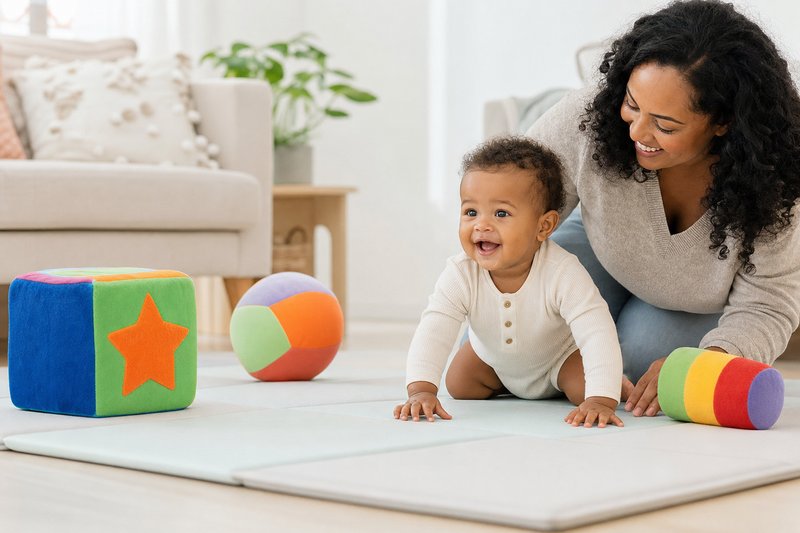
- Offer safe things to reach for. Lightweight rattles and teethers reward those new grabbing skills.
- Give floor freedom. Time on a firm, safe surface lets your baby practice rolling and pushing up.
- Narrate and name. Keep talking, reading, and repeating those babbled sounds back to them.
- Baby-proof early. A baby who can roll and reach is a baby on the move — get ahead of it.
When to Check With Your Pediatrician
Bring it up if, by around 6 months, your baby is not rolling in either direction, seems very stiff or very floppy, is not reaching for objects, or does not laugh or make squealing sounds. Ranges vary, and a quick conversation is always reasonable.
What Comes Next
Months 7 to 9 bring sitting solo, crawling, and the first flashes of stranger awareness. Continue with baby milestones: months 7–9.
That first-taste face and mid-roll grin make unbeatable photos — enter your favorite in our monthly contest.
Disclaimer: This article shares general parenting information, not medical advice. Every child develops at their own pace, and feeding decisions should be made with your pediatrician. For questions about your child's growth or development, consult your pediatrician and the CDC's "Learn the Signs. Act Early." milestone resources.
Your Baby Could Be Our Next Winner!
Cash Prize in monthly prizes • FREE entry • Real winners • Optional paid votes