AI-generated editorial illustration; not a contest entrant or winner.
Baby Photos in Low Light: Work With the Room You Have
Low light does not mean bad light. It asks for slower expectations, steadier hands, and attention to the small pools of brightness already in the room.
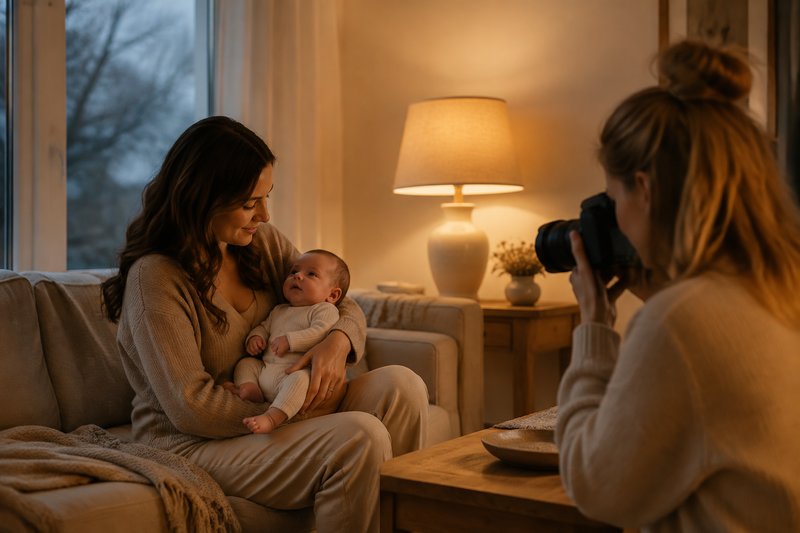
Some of the most recognizable family moments happen after the bright part of the day. A baby is awake before the lamps are fully on. A parent rocks beside a reading light. Rain presses the afternoon into a softer gray. Low-light baby photography is not about making those rooms look like noon. It is about keeping what the room actually felt like.
Find the Brightest Direction
Look for the light that already has a purpose: a window, an open doorway, a lamp beside a chair. Turn the baby or your own body toward that light instead of adding more equipment. You are looking for enough light to describe the face, not a perfectly even glow across the whole room.
If a window is available, our window-light baby photography guide shows how to use it safely and simply. On darker days, move closer to the window and keep the background behind the baby quiet.
Choose a Moment That Can Be Still
Phones and cameras need a little more time in dim rooms. Instead of chasing crawling or running, photograph the pause: a baby looking at a book, resting after a feed, listening to a voice, or holding a familiar toy. Stillness is not a limitation; it can be the subject.
Stabilize Yourself First
- Lean your shoulder against a wall or doorframe.
- Hold the phone with both hands and exhale before you press the shutter.
- Take a short burst of frames, then choose the sharpest one later.
- Tap on the face before shooting so the camera knows what matters most.
These small choices can make more difference than a new camera setting, especially when the room is moving around you.
Tell Camera Shake From a Moving Baby
Zoom in on one test frame. If the furniture and the face both look streaked, brace your hands and try again. If the background is sharp but the face or hands blur, the child moved during the exposure. More support for the phone will not fix that: find brighter light or wait for a natural pause.
If your phone offers a night mode that asks you to hold still for several seconds, save it for the empty room. A moving baby may become a blur even when you hold the phone perfectly steady. Compare a normal photo in brighter light before taking a whole series.
Keep the color honest
Warm lamps may make skin look more golden than daylight, and that is part of the room. Make only modest edits afterward; a heavily brightened photograph can lose the evening feeling that made you reach for the camera.
Do Not Ask the Room to Be a Studio
Turn off a distracting television, move a bright laundry basket, or close a door if the background is busy. Then stop. Low-light photographs often become muddy when every corner is lit, decorated, and adjusted at once. One chair, one lamp, and one face can be enough.
Use Flash Only With Care
A sudden flash can interrupt a quiet moment and create hard shadows. If the room is too dark for a usable picture, bring the baby to a brighter, safe part of the house or let the moment remain unphotographed. Never place lights, cords, or equipment where a child can reach or pull them, and never trade supervision for a setup.
Keep the Imperfect Frame
Some low-light images will be grainy, softly focused, or a little crooked. If the expression is there, keep it. Technical perfection is only one kind of clarity. A slightly blurred photograph of a child reaching for a parent in the evening can still be exact about the life you were living.
Work with the room you have. Let it stay a room, not a stage, and let the camera remember why the light felt worth noticing.
Disclaimer: This article offers general photography inspiration. Supervise babies and children at all times, keep lamps, cords, and equipment out of reach, and use stable, low surfaces for every photo session.
Your Baby Could Be Our Next Winner!
Cash Prize in monthly prizes • FREE entry • Real winners • Optional paid votes